Professional Safety Standards
Master the essential standards for a sterile studio. From legal compliance to expert hygiene supplies, we guide you through every safety hurdle.
Don't leave hygiene to chance. Get the professional standard today
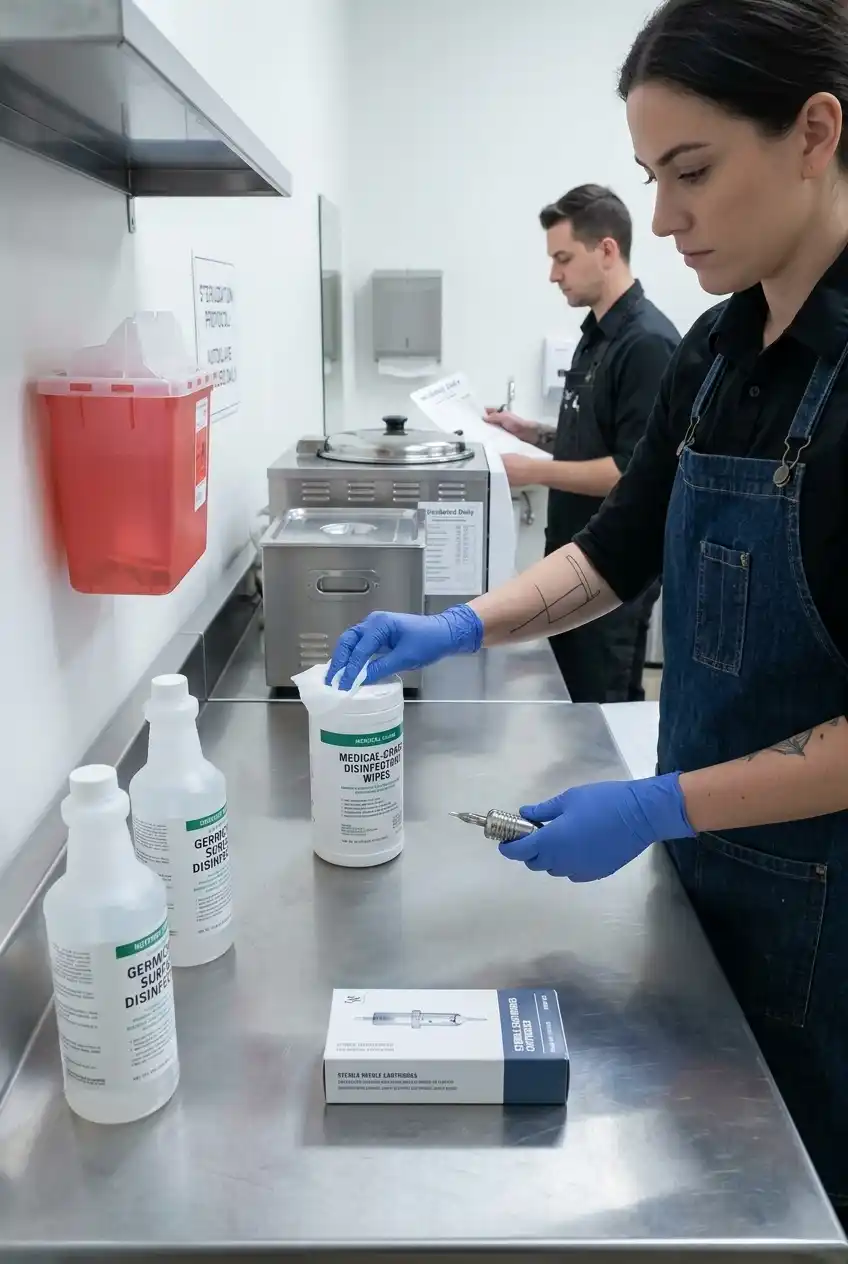
Safety First
Protecting Your Art & Clients
Setting up a tattoo shop is no easy feat. In addition to all the hurdles that come with setting up a business, you’ll be dealing with potentially harmful chemicals, needles, body fluids, and hazardous waste.
Staying on the right side of the law by responsibly handling health and safety hazards is only possible through the right kind of equipment. We’ve put together a comprehensive list of all the hygiene supplies you need as a tattooist.
Legal Requirements
Tattoo Shops: Relevant Legislation
Licensing
All tattoo artists, along with their premises, must be registered with their local authority environmental health department. An inspection will take place when the premises is registered and further inspections will happen on a semi-regular basis.
Most local authorities will require the tattooist or tattoo shop to hold a tattoo, piercing and electrolysis licence, although in London businesses are required to hold a Special Treatments Licence instead. Contacting your local authority to find out what steps are required to register your premises is the best way forward as the process differs from council to council.
Registering with the Environmental Health Department
Every tattoo shop must be registered with its local environmental health department. Permanent or semi-permanent skin colouring is illegal if you aren’t registered. Registration is only successful if the premises passes an inspection of health and safety standards.
Health and safety standards vary slightly depending on locality but generally, you will be expected to demonstrate:
- Appropriate use of personal protective equipment, for example, disposable gloves.
- Appropriate sterilisation methods, for example, the use of an autoclave.
- Responsible waste disposal, for example, the use of sharps bins and correct hazardous waste bags.
The handling of potentially hazardous substances means that your tattoo business also needs to comply with Control of Substances Hazardous to Health (COSHH) Regulations. Contacting your local environmental health department to find out which specific health and safety protocols you need to follow should be your next step.
Waste Disposal
Some waste produced by tattoo parlours is classed as hazardous clinical waste. Any body fluids or materials that have come into contact with body fluids need to be treated as potentially infectious and are classed as clinical hazardous waste. This includes:
- Blood
- Used needles
- Sharps that have been contaminated with blood, for example, broken glass in an accident.
- Gloves
- Dressings
- Swabs
These will need to be appropriately disposed of and collected only by an authorised hazardous waste collector in your locale.

Checklist
Tattoo Shop Checklist for Hygiene Supplies
Keeping your shop clean and maintaining a sterile environment when giving tattoos will help you to stay on the right side of health and safety compliance. Not to mention your customers will feel at ease and know they are in good hands when they come through the door.
Here’s a comprehensive list of hygiene supplies needed in a tattoo shop:
PPE (Personal Protective Equipment)
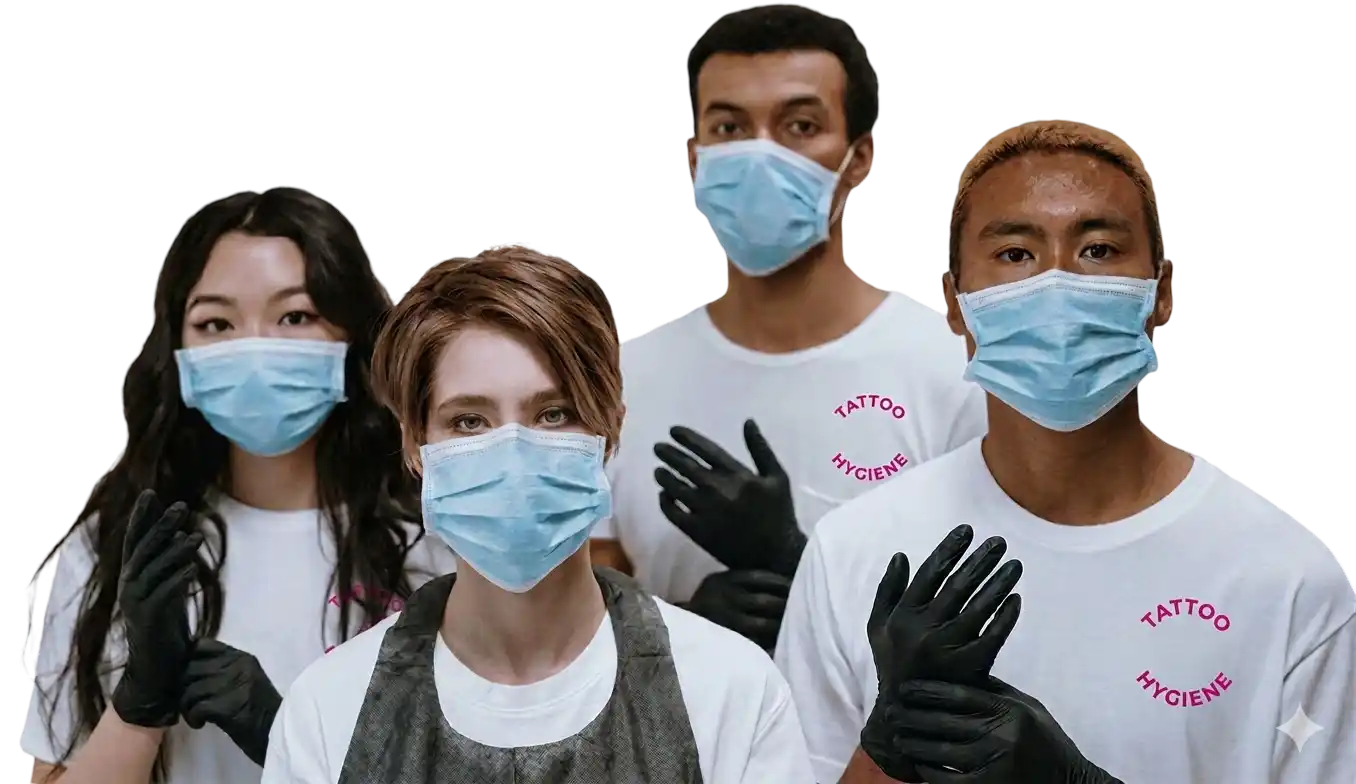
Essential barriers like nitrile gloves and FFP3 masks to protect both artist and client.
- Type IIR face masks
- FFP3 valved respirators
- Vinyl gloves
- Nitrile gloves
- Disposable aprons
Infection Control
Professional sterilization tools, sharps disposal, and germicidal solutions for a sterile studio.
- Hand sanitiser gel
- Biohazard waste bags
- Biohazard spill kit
- Sharps bins
- Detergent wipes
- Alcohol-free universal wipes
- 70% alcohol wipes
- Disinfectant spray
- Disposable couch roll
- An autoclave machine and bag to store autoclaved equipment
- Needle trays
- Germicidal solution
- Ultrasonic cleaning solution and cleaner
- Brushes to clean tubes and tips
- Tattoo machine rack
- Protective cover for tattoo machine
First Aid
Emergency medical kits and AED devices to ensure immediate response to any workplace incident.
- Workplace first aid kit
- Public access trauma first aid kit
- Automatic External Defibrillator (AED)
- Washproof plasters
Tattoo Care
Specialized aftercare products, including antiseptic creams and sterile dressings for optimal healing.
- Antiseptic cream
- Vaseline
- Plastic wrap
- Conforming bandage
- Non-adhesive double-sided wound dressings
- Adhesive wound dressings
- Microporous tape
- Alcohol prep pads
- Stainless steel scissors
Hand Hygiene & Skincare
Sharps & Body Fluids
Sterilizing the Environment
Proper Use of PPE
Waste Management
Safety Protocols
Tattoo Shop Infection Prevention and Control
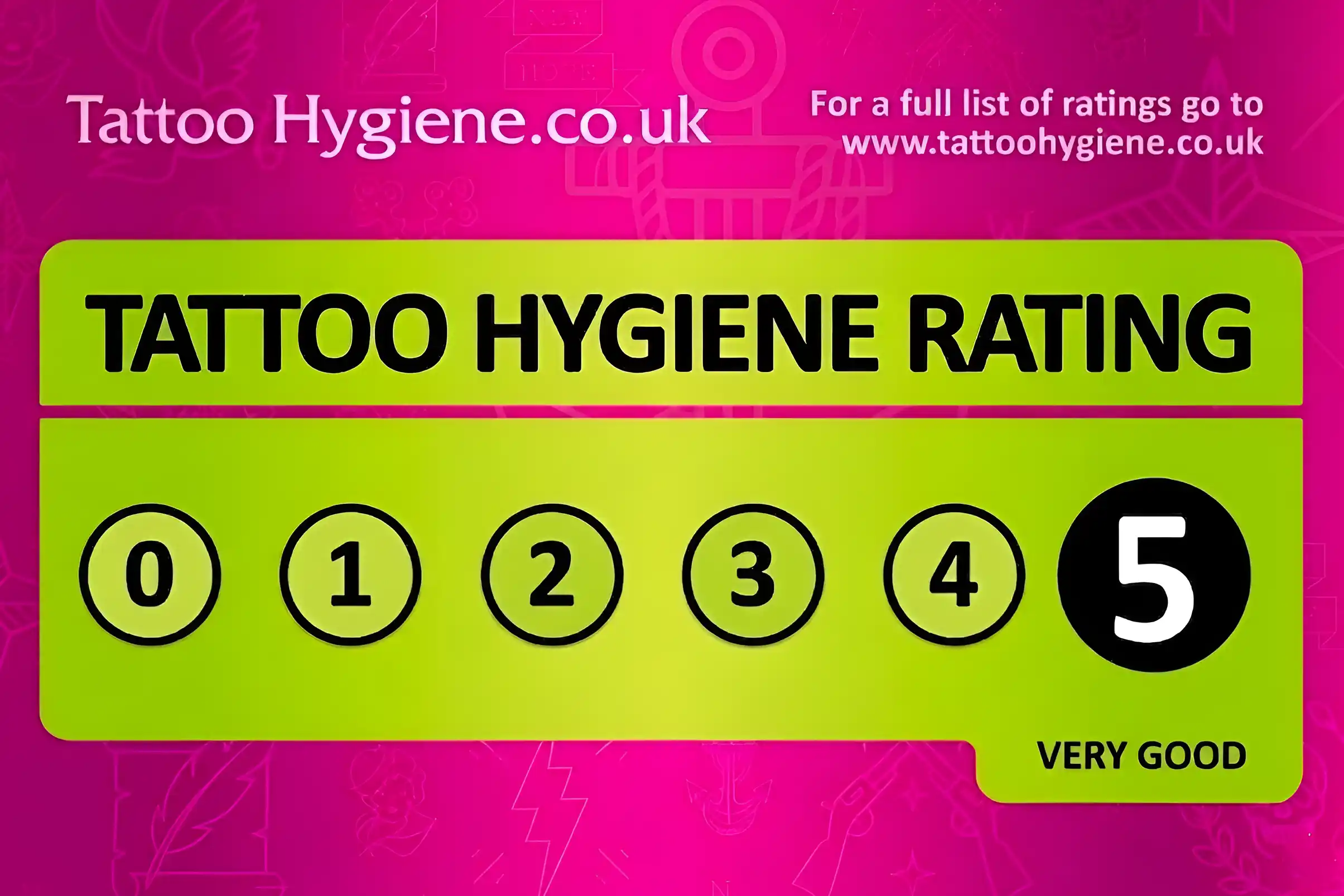
Public Health England, together with The Chartered Institute of Environmental Health, Health and Safety Laboratory, and the Tattoo and Piercing Industry Union collaborated to create an extensive guide to tattooing and piercing which covers a number of cleaning and hygiene protocols.
Infection control should be managed through five standard principles that make up the fundamentals of any tattoo shop cleaning checklist
01.
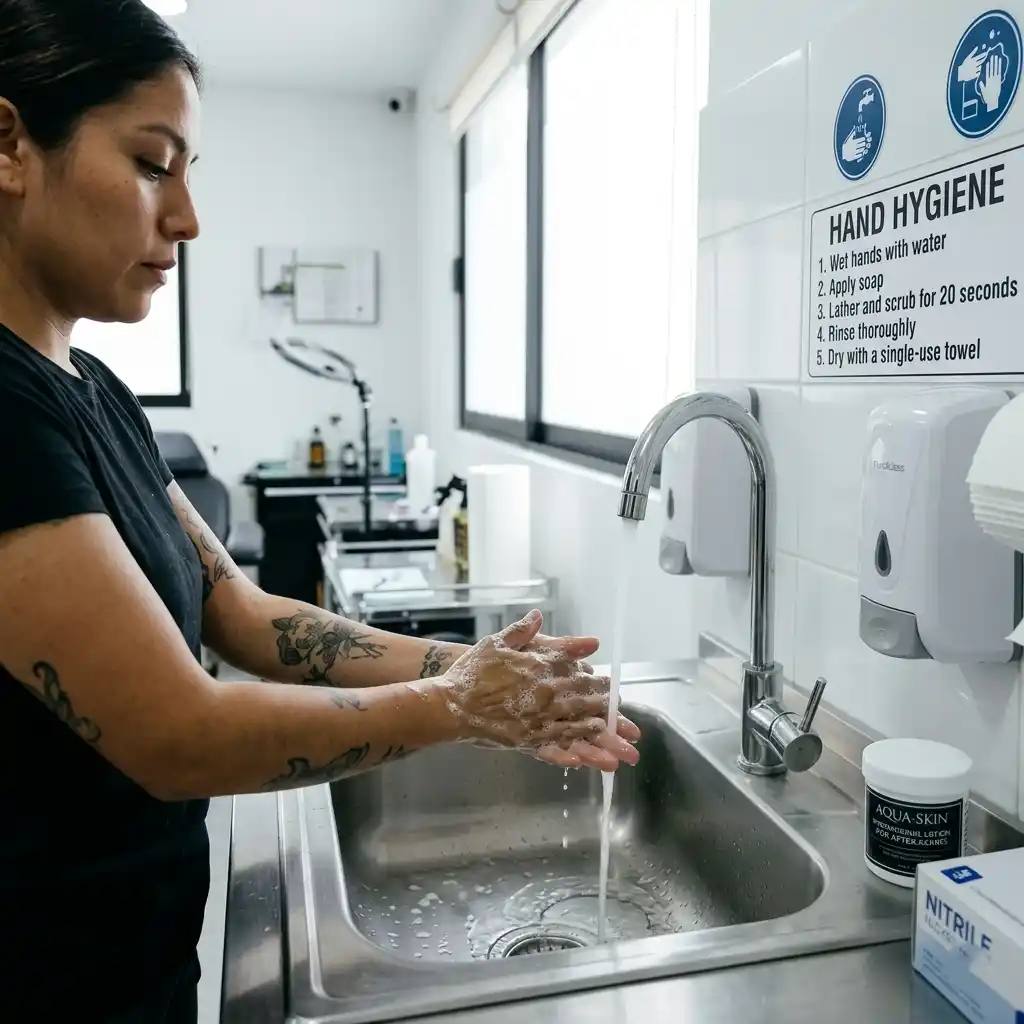
Hand Hygiene & Skincare
Dirty hands are a primary source of infection. Handwashing must last at least 20 seconds using running water, soap, and a pedal bin to avoid re-contamination. Jewelry must be removed during procedures. Hand gel is a vital supplement for sanitizing after non-clinical tasks, like handling cash, but never replaces washing when hands are visibly soiled or before starting a tattoo.
02.
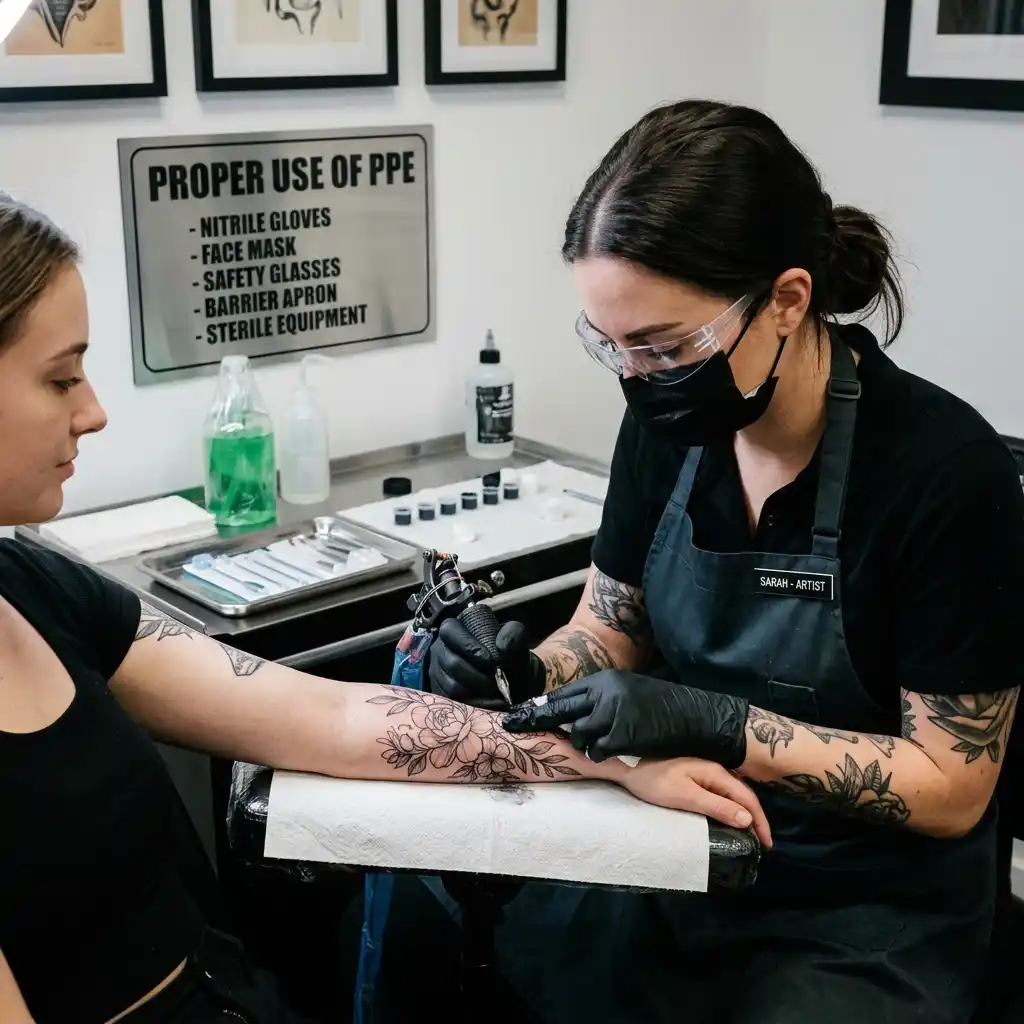
Proper Use of PPE
PPE selection is based on risk assessment. Nitrile gloves are mandatory for tattooing as they are puncture-resistant and latex-free, while Vinyl gloves are reserved for cleaning and admin tasks. Type IIR or FFP3 masks protect against respiratory droplets, and disposable aprons must be worn whenever there is a risk of body fluid splashing. All PPE must be CE-certified to meet safety standards.
03.
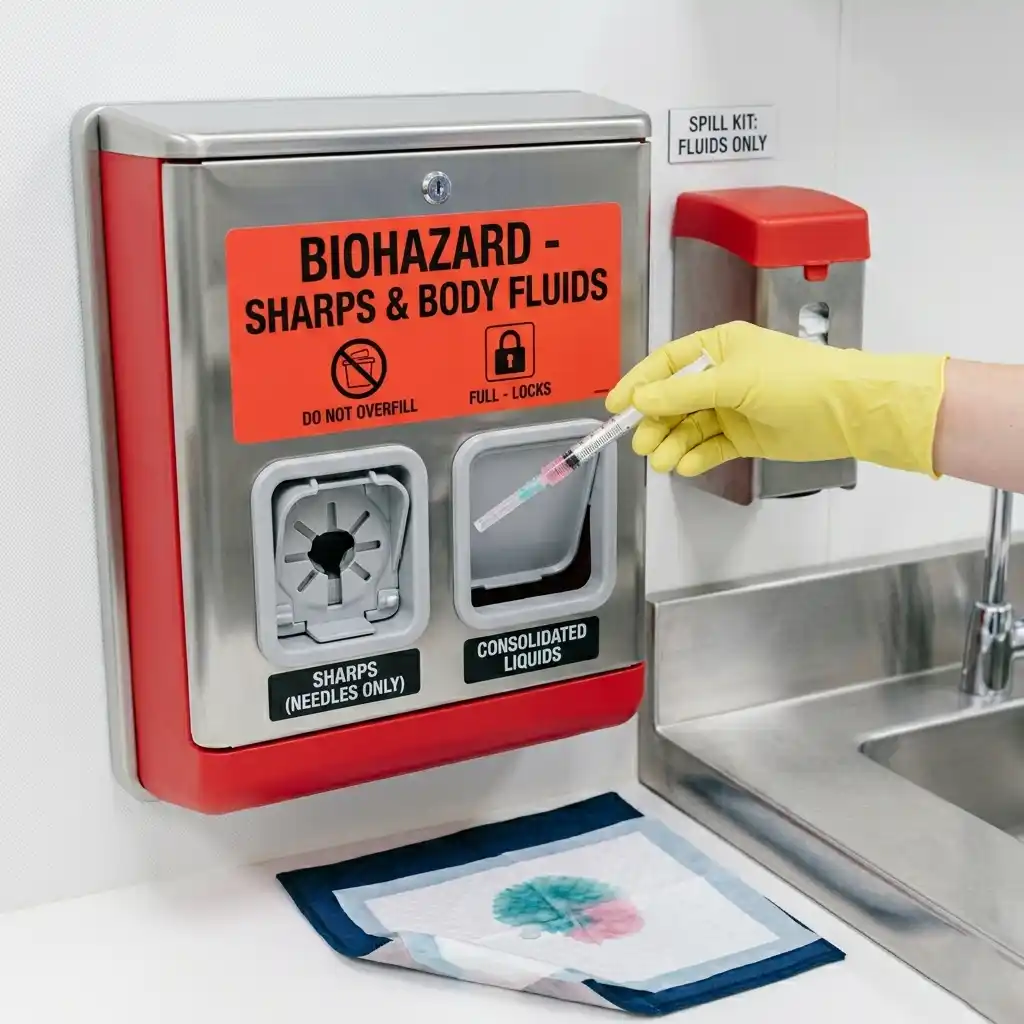
Sharps & Body Fluids
To minimize the risk of blood-borne diseases like HIV or Hepatitis, all sharps (needles, razors) must be placed in a UN3291 compliant bin immediately after use. Only sterile, single-use needles should be used. In case of blood spills, a biohazard spill kit must be used to neutralize the area quickly. Staff immunization against Hepatitis B is highly recommended for added safety.
04.
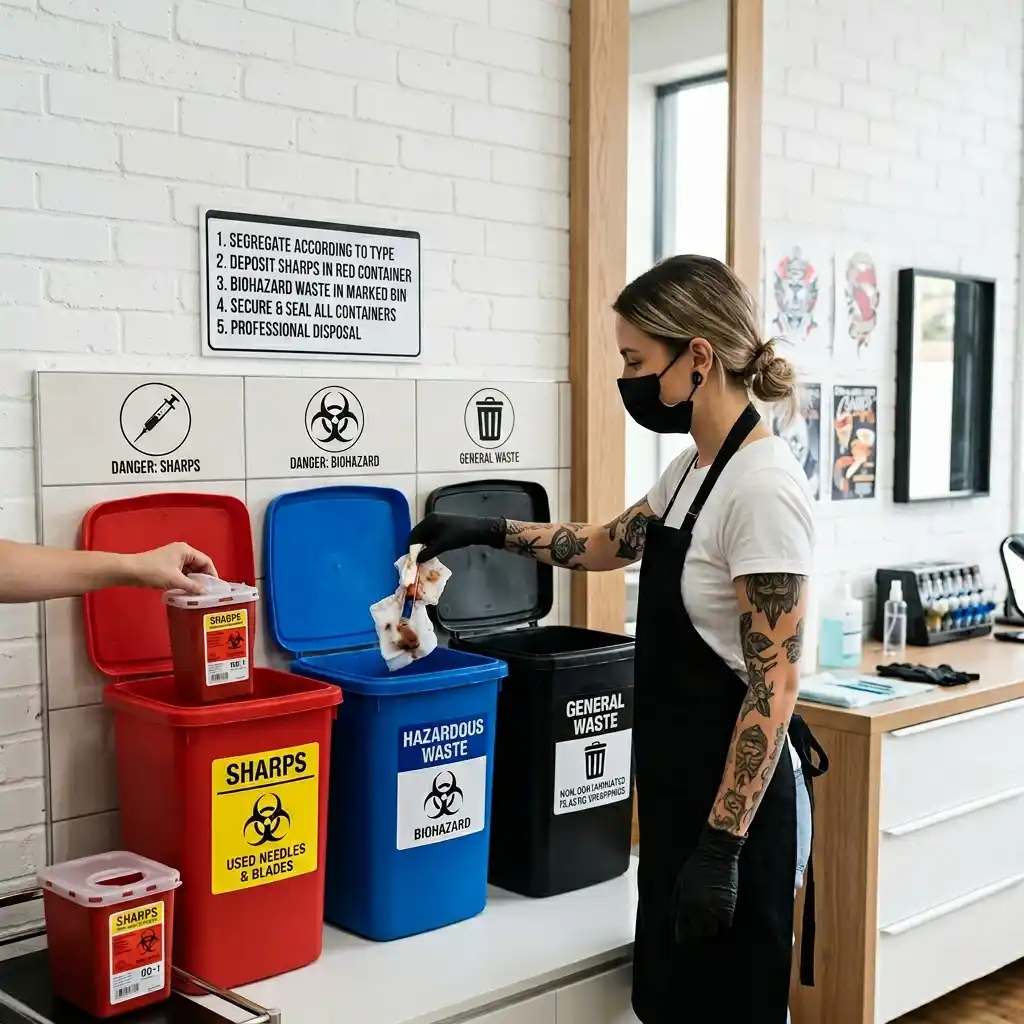
Waste Management
Tattoo shops produce hazardous clinical waste that requires specialized handling. This includes used needles, cotton swabs, gloves, and anything contaminated with body fluids. Soiled materials must be placed in yellow biohazard bags and collected by a licensed hazardous waste company. Keeping accurate, safe records of all waste collections is a legal responsibility for the shop owner.
05.
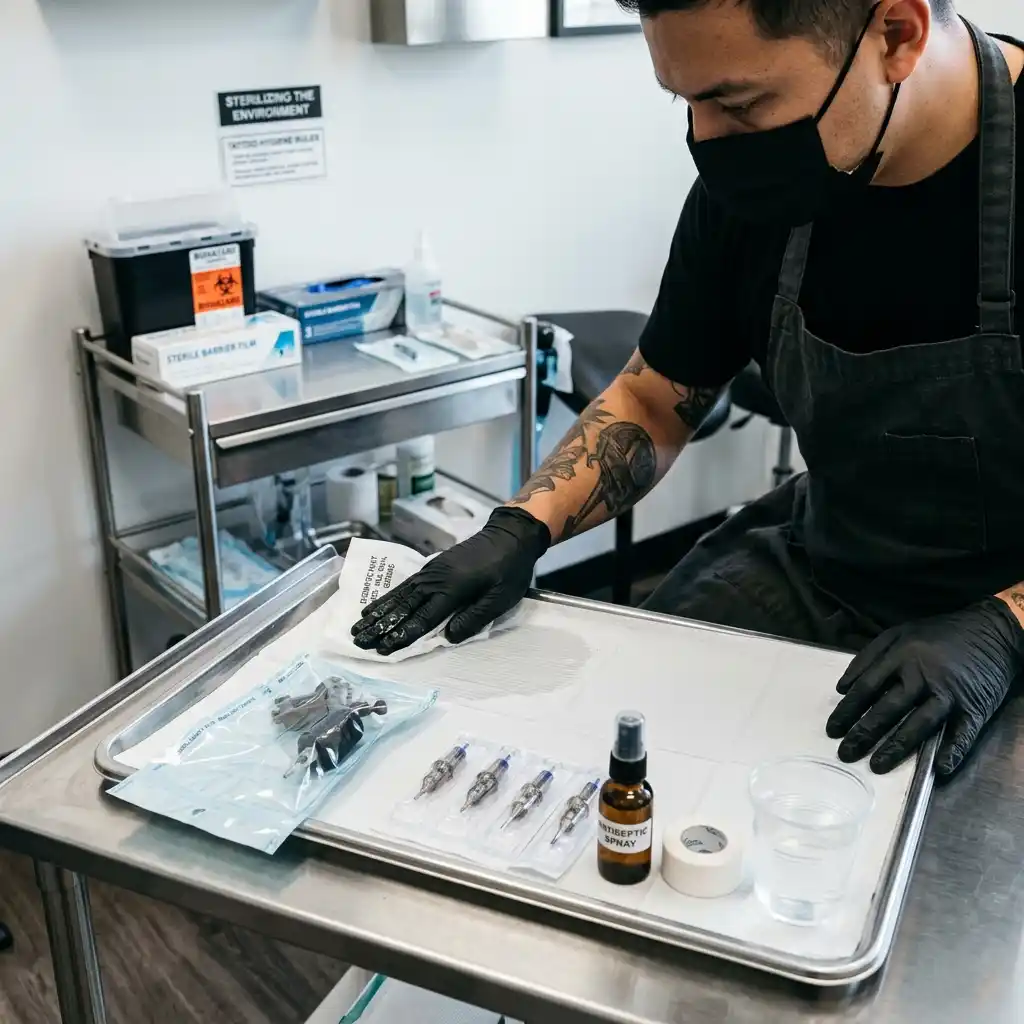
Sterilizing the Environment
A sterile environment requires a cleaning policy where all staff are trained. Use non-porous equipment that is easy to disinfect. The cleaning schedule must move from the cleanest areas to the dirtiest to prevent cross-contamination. Appointing a Hygiene Officer ensures that protocols, such as using single-use cloths and maintaining the autoclave machine, are strictly followed every day.